Sunday, November 24, 2013

Why Goal Setting Is Important And How To Do It Correctly

Setting goals is a fundamental component to long-term success. The basic reason for this is that you can’t get where you are trying to go until you clearly define where that is. Research studies show a direct link between goals and enhanced performance in business. Goals help you focus and allocate your time and resources efficiently, and they can keep you motivated when you feel like giving up.

We all seek success, and we know that nothing ever comes easy. In order to achieve the success we spend our lives chasing, we first need to define our goals. Once that is done, it’s time to start thinking about how to accomplish them.

I spent many years of my life seeking success before I realized that success is not a goal one can set for themselves, it is a product of achieving the goal.

How To Set Goals

Goal setting is something you need to practice in order to get it right. It takes time to understand exactly how to set a clear goal that is possible to accomplish. Goal setting is a process that will help you motivate yourself, and the more detailed and precise the goal is, the better your brain will analyze the steps in order to achieve it.

There is a technique that first asks you to set a lifetime goal, such as “I want to XYZ”, then break it down to small, quantified goals such as “In one week I will find someone that can help me get to XYZ”, and “In one month I will practice XYZ at least twice a week.” for example. The smaller and more manageable a task is, the easier it is to measure success, and understand what needs to be done in order to accomplish it. Planning towards these smaller goals not only makes it easier to formulate a definite plan of action that we can start working on right away, but research has shown that hitting smaller milestones provides real motivation and greater contentment.

Achieving a goal is a process, and like every process sometimes you take one step forwards and two steps back. Its important to know how to track and measure your progress. Some goals are “instant goals” that you can accomplished very quickly, but others depends on the progress you make along the way. Sometimes there is a long road on the way to achieving your goals.
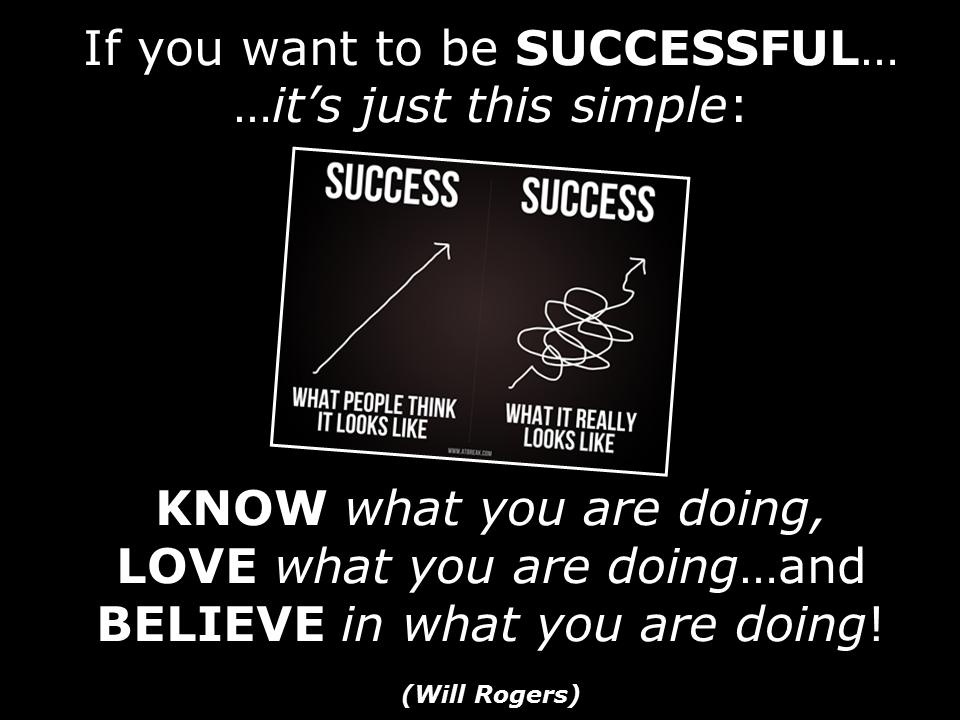


Knowing how to be honest with yourself, and learning from the good and bad choices made along the road, are vital parts of the process of achieving your goals. Always know what went wrong, and what went right. When something goes wrong, learn from it and move on. When something goes right, however, make sure know how to enjoy it.

Always Be Positive and Have Confidence In Yourself

Can we accomplished a goal without believing that its possible? Sometimes I feel like setting a goal is a process of making you believe in yourself and in your capabilities. Goals can only be accomplished if we are “hungry” enough to achieve them. In order to be hungry, you need to really want it, and be sure that you will do anything in your power to get there. Self-confidence combined with a positive attitude is the key to quickly achieving our goals.


To Learn More About How We Can Help You Set, Reach, and Exceed Your Goals, Call 410-645-0231 NOW.

Tuesday, October 9, 2012

Winning Tips for Optimum Recovery


Overtraining, as we have seen, is a complex syndrome with no guaranteed solutions. However, certain interventions show promise for prevention and treatment. A key concept is recovery, the antithesis of overtraining. One of the biggest difficulties in dealing with motivated but overtrained athletes is that the interventions generally consist of asking them to do less: “Take a day off from training.” “Take it easier on those intervals.” “Don’t do that workout.” You’re hurting yourself by training too much.” The idea of doing less presents a dilemma to athletes who likely became good through tough training and pushing through the bad days and who are seduced by “if this much training is good, more must be better” thinking. They overtrain by simply doing more of what made them good. The message of doing less is therefore extremely difficult for these athletes to hear and goes against most training philosophies. A typical reaction: “What do you mean, do less? My competitors aren’t taking a day off.”

Recent developments in research on overtraining have shifted focus from overtraining to the idea of underrecovery. Instead of telling an athlete to cease some aspect of training, we can instead channel their need for action toward recovery activities. Indeed, the concept of effective, regular, and varied recovery activities has become part of the language of today’s smart, professional athlete, which is also the best way to sell it. Statements like “You’re not doing everything you can to succeed if you’re not taking care of your recovery” challenge athletes to tackle recovery (and decrease susceptibility to overtraining) in a way that telling them to reduce their training regimen never could. How can coaches and athletes recovery principles to enhance training and decrease the chance of overtraining? Individualization is key. The
first step is to incorporate recovery systematically into training. If a periodized training program is used, it’s important to incorporate more recovery activities into the higher-volume and more-intensive training periods.


An ideal training program that incorporates passive and active recovery activities should include a variety of techniques. Just as there are numerous ways to work on endurance training (hill running, strength and conditioning programs, sustained skill practice), and good coaches mix things up to maintain motivation, there are many ways to enhance recovery. Coaches and athletes should keep this aspect of their training programs as fresh and interesting as the rest of their training.

Coaches must be good teachers and enforcers of recovery principles with their athletes. For example, an active rest day at the track shouldn’t turn into a track meet if rest is the goal. Particularly at the elite level of sport, athletes need to learn that
appropriate recovery is as much a part of their job as is their training regimen, diet, or sleep.

Tuesday, October 2, 2012

How To Stay Motivated


The subject of motivation is a complex one—in short, it’s an intangible variable that can ebb and flow widely in short periods of time. Athletes with seemingly unparalleled drive lose it. Loafers show up to practice one day with a fire lit inside them. From week to week, teams, athletes, and coaches fluctuate in their intensity and level of dedication.


Norman Triplett is generally credited with the first formal experiment in sport motivation psychology. A psychologist at Indiana University, Triplett was a bicycle enthusiast who had noticed that racers seem to ride faster in pairs than alone. In 1889, he tested his hypothesis by asking children to reel in fishing line in a number of competitive conditions. As predicted, the children reeled in more line when they performed next to another child. The same held true when Triplett examined racing times—cyclists rode faster when paced or pitted against others than when they rode by themselves.

Psychoanalyst Sigmund Freud argued that motivation was a product of the subconscious instincts of sex
and aggression. Our behavior, he said, is largely shaped by our instincts.

Behaviorist B.F. Skinner was on the other end of the nature–nurture continuum. He didn’t believe in
the subconscious. To explain motivation, Skinner put forth stimulus–response psychology, claiming that all behavior is controlled by external reinforcements. We are essentially a black box, Skinner said; what goes in determines what comes out.

Although their beliefs were radically different, these psychologists agreed on one thing: Motivation is not up to the individual. They professed humans to be, essentially, products of genetics or the environment. The argument at the time laid groundwork for the nature-versus-nurture debate that still continues today: Is our behavior dictated by our biological makeup or is it a product of what our experiences have taught us? The answer is both.


The most robust motivation—the sort that can push through four years of grueling training for the Olympic Games, or dealing with a coach who doesn’t believe in you—is rooted in the heart and the soul. Motivation strategies should foster autonomy, competence, and connectedness. Examples include:

Push the edge - Find a weakness or hole in your game and get excited about where your game will be after you change it. Similarly, be creative. Think up something no one in your sport has dared or perfected. Experience success - When learning new skills and strategies, go step-by-step. Start with an easy piece, master it, and then move on to the next-easiest piece. Or begin by modifying the skill to something you can do well. Let yourself experience success. Keep track of your PRs and how many times you can break them.

Change your thinking - The old adage about learning from your mistakes is well and good, but over time you should have a short-term memory for failures and a long-term memory for success. Keep a vivid mental catalog of your greatest performances.

Get involved - Autonomy directly improves motivation, and perhaps the greatest contributor to autonomy is having input on decisions that affect you.

In both individual and team-sport settings, athletes should feel ownership of training rules, competition choices, and strategy decisions. Interestingly, on the professional level, many head coaches comment that their success depends entirely on their players’ belief in the “system” or playbook. The easiest way
to ensure this is to get them involved!

Praise others - If you can’t see positive or exciting things in the athletes and coaches around you, how can you do the same for yourself? Moreover, a sense of connectedness depends on everyone’s awareness of the contributions that others make.

Vary training - An imbalance between high competence and low task difficulty can result in boredom. So too can constant hammering at one task. A significant portion of training—just as much as is reserved for skill advancement—should be devoted to play for the sake of play, without rules or evaluation.

Put yourself first - Human beings are most productive at homeostasis since in that state they are not distracted by conflicting basal drives. Make sure to eat properly, stay hydrated, and get ample rest.

Find motivated peers  - Both on and off the playing surface, spend your time with people who want to accomplish great things, aren’t afraid to talk about it, and get revved up by other people’s dreams. An effective support system is vital to motivation, especially during difficult times. Conversely, motivational
“black holes” are people who always criticize the coach, moan about bad calls, loaf in practices and workouts, and generally focus on obstacles, frustrations, and what can’t be achieved.


Think positively - What conversation goes on in the back of your head? It’s with you all day, but how much of it do you pay attention to? Actually, all of it, subconsciously. You’d better start paying conscious attention. Is it positive or negative? Is it about what you can do or what you can’t do? Is it hung up on difficulties or engaged in a search for solutions?
Remember your dream - Don’t make revisiting your dream a rare event. Spend time frequently reconnecting with the real reason why you perform—once again the heart, soul, and will of it all.

Wednesday, July 25, 2012

FOCUS: THE KEY TO SUCCESS


Hard work is a key to success. However, winning is more than just working hard. It’s working smart. It’s having a direction and focus. It’s having a plan and working the plan. A plan involves defining what has to be done, how to go about doing it, who will do it, and setting time lines. With winning teams it’s very much about everyone working the plan together. Working the plan is an expression of organization, direction, and cooperation. It involves a coordinated effort by a group of people directing their energy efficiently and effectively.

When Vince Lombardi, the legendary football coach, was asked by a prominent industrialist, “What makes a winning team?” Lombardi said, “The players have to know their jobs.” First you need to tell people exactly what is expected of them. “Once you know specifically what you want your team to be doing in the future, then you need to measure it.

Focus is a key to success. Winning teams share a winning focus. There’s an awareness of where they’re going, what has to be done, and a belief in their capability as a group to execute the plan. Focusing on what the competition is doing can be limiting. Instead, focus primarily on what you are working to create, and how you are trying to improve relative to an absolute standard of excellence.

The pattern of defining what has to be done, communicating it to team members, rehearsing, executing the plan, and then assessing and adjusting is key to success in most endeavors. As the coach said, “The players have to know their jobs.”

Focus is key to superior performance, and the plan is a blueprint for focus.

Thursday, May 10, 2012

How Parents And Coaches Can Help Young Athletes Succeed In Sport And Life

People often think professional players show up at seven o’clock for a seven-thirty game, get dressed, and play. They do not realize that the players often arrive three or four hours before game time to work on their skills.
“Many athletes have tremendous God-given gifts, but they don’t focus on the development of those gifts. Who are these individuals? You have never heard of them—and you never will. It is true in sports and it is true everywhere in life. Hard work is the difference— very hard work.” - John Wooden
Good results rarely happen by chance. Hard work, coupled with correct knowledge, is necessary for ultimate success. There is a famous saying that goes “luck is what happens when preparation meets opportunity.” Often, people say a player was lucky when they do well or win. In reality, hours and hours of work produced the good results.

Very few young players work as hard as they could, but that is probably a good thing. Too much hard work at a young age often leads to burnout. Parents and coaches should promote the idea that hard work leads to success and rarely will success come without the hard work, but they should not push their player to the point of overexertion or disaffection.

It is frustrating for parents when their kids do not want to practice. Often, parents cannot understand this, especially when the parents feel they have been nothing but encouraging with the child’s participation in the sport. It is important that parents and coaches understand that they should try to inspire young players, but motivation comes from within the players themselves. All athletes are different. Some are self-motivated at a young age. Others become motivated at a later age, and some never seem to attain the motivation for sports.

Letting a young athlete know that they can develop this talent with desire and practice is good. These words may create the love of the sport and the motivation at some point in a young player’s career. It all starts with love of the game, followed by hard work, which produces success. Those three, love, hard work, and success build upon and feed off each other. No one can make a player a major-leaguer; only the player can do that. Nevertheless, parents and coaches can help players develop a love of sport, a good work ethic, and success.

Monday, March 28, 2011

3 Lessons I Learned About Success From The Book Of Eli


WARNING: I am about ruin the “twist” of this move AND reveal my age all over this post.....


I know this movie is considered “old” now, but I just love this movie. I love the action, the photography, the story, the action... and did I say action...... “Sooo, you are going to re-make The Road Warrior with Denzel Washington AND Gary Oldman... and sprinkle in a little Flashdance”... What's not to love about this movie.


Besides all the action and cool colors, The Book of Eli had some deep lessons on what it takes to be successful


Lesson 1 – Keep Going West


Eli had a goal and laser beam focus. “Take this book and keep going west until you get there.” No matter who got in his way, how many battles he had to endure, the next day he brushed him self off and kept going west.


Lesson 2 – Know Thyself


*Spoiler Alert* Eli knew he was blind, but that didn't stop him from kicking ass and going west. He used his strengths to get him through. He smelled his enemies before they had a chance to attack, he could hear the intention in their voice, the rhythm of their breathing. He was well aware of his strengths and worked with them masterfully.


Lesson 3 – Watch What You Eat


There are cannibals out there, feeders of human flesh. Eli knew he couldn't eat just anyone's food and neither should you... If you want to be successful. Be careful of what you eat. Poor nutrition no matter how dialed in the rest of your program, your results will go up in smoke.


Sunday, March 20, 2011

6 Things You Must Have For A Successful Spring Training

As a strength coach, I am constantly looking for ways to improve my clients athletic ability or—more importantly— strength, speed, and mental. I want them to have a program that would make a difference. I want them to have both the mental AND the physical advantage going into a game.


Throughout my quest to achieve this goal, I have always been looking for programs that work. I’ve tried EVERYTHING. I bought about every book, dvd, attended every seminar I could find and talked to as many people as possible for ideas. Some of the programs allowed for some success while others have been an epic fail.


So, my quest continued as I patched together programs and had moderate success, but not the success that I knew that I could achieve.


Finally, though years of trial and error, I have come to the conclusion that success is the result of hard work—brutally hard work—that follows a well-developed plan of attack. The reason that most people are not successful is that they are victims of poor planning or not planning at all.. I get the most out of my clients because in addition to making them work hard and want to win, my training involves careful planning. Success depends on identifying needs along with your weaknesses and then formulating an appropriate plan of attack.


The Next Level plan of attack includes the following:

Strength training – the foundation on which the plan of attack rests. We use barbells, dumbbells, kettlebells, sleds and more with the idea to develop the greatest levels of strength possible.

Speed training - my thoughts on the significance of speed can be summed up in this quote from The Art of War, by Sun Tzu: “Speed is the essence of war.” Special sprint training will employ a variety of drills to maximize absolute speed.

Agility training – start, slow down, change directions, and accelerate with a minimum loss of speed. Agility drills require rapid changes of forward, backward, vertical, and side-to-side movement.


Flexibility training - one of the most important, yet misunderstood, areas of athletic development is range of motion, or flexibility... often mistaken as simply stretching.


Mental Toughness training – toughness is flexibility, responsiveness, strength, and resiliency under stress. Toughness training puts you in control of your performance level on and off the field.

Recovery Training – recovery must be planned, scheduled and “trained” just like any other element of your complete training plan of attack. Knowing how and when to recover may prove to be the most important skill in your life.

One thing is for sure the possibilities are endless and there’s no way you’ll get bored with your training using this plan of action..

++++++++++++++++++++++++++++++++

Sign Up Today for the 2011 Sprint Camp

This program is designed to increase your speed, agility, coordination, explosiveness, injury prevention and much more.

WHAT CAN OUR PROGRAM DO FOR YOU:
· Increase acceleration and MAXIMIZE breakaway speed
· Increase your resting metabolic rate (burn fat while you rest)
· Teach you proper sprint mechanics to get faster immediately
· Learn drills, cues and workouts teaching you how to accelerate smoothly and reach your fastest top speeds
· Discover the secret tomaintaining near top speed so athletes can outrun their opponents every time…or run them down

This is a great opportunity for athletes to receive top of the line professional CERTIFIED instruction to significantly improve game-day speed.

Call me now at 410-645-0231 for more information.

Friday, March 18, 2011

Mental Toughness Advice From Ancient Japan

The Samurai.. the privileged warrior class of feudal Japan. The samurai were indifferent to death or pain and wore two swords which symbolized the “soul of the samurai.” These guys trained as though their very lives depended on it... because... it did. It wasn’t just about losing a competition it was about surviving to fight another day. They knew from experience that in order to win battles—most of which were fought in hand-to-hand combat—they had to develop their minds as well as their bodies.


3 MENTAL TOUGHNESS STRATEGIES FROM 3 OF THE GREATEST MARTIAL ARTIST


1. PRACTICE, PRACTICE, PRACTICE

“Once you have trained yourself well, your body and limbs will move automatically without any conscious effort. Your mind will not be overwhelmed by your physical movements. You will employ techniques without having to think. Once you have attained this state of mind, not a single doubt nor hesitation will arise... Train yourself thoroughly and then forget about it. Throw away your mind.”


Yagyu Munenori – the most respected samurai serving the Tokugawa Shogun family.

2. HAVE A SHORT MEMORY

“It is not good to hold on to one's previous thoughts or to retain what is presently in the mind. You must make a clean and complete cut between the past and the present. If the mind is drawn off into thoughts of the past, that means it has stopped. It is important that the past does not interfere with the present, so cut off your previous thoughts and be careful not to stop you mind.”

Takuan Soho – revolutionary samurai priest who was fired because he advocated the separation of religion and the shogunate government. He was later rehired by our friend Yagyu Munenori.

3. EXERCISE YOUR BRAIN

“Never forget to make your mind work when your body is quiet, and to make your mind calm when your body is in action. It is important to make your mind useful and enrich it with knowledge. Take no account of the trifles and thoroughly keep your spirit strong... Keep your mind clear and maintain a broad view of things.”


Musashi Miyamoto – genuine samurai badass. Between the ages ages of 13 and 39, he had over 60 to the death sword fights and never lost one! Not only was he a master swordsman, he also was a master of drawing, poetry and sculpture.


Marinate on that....

Friday, March 11, 2011

The Mental Toughness Pyramid

How do the super-successful separate themselves from the rest? The average?


I'll let The Don answer this one...

“Creative people rarely need to be motivated – they have their own drive that refuses to be bored. They refuse to be complacent. They live on the edge, which is precisely what is needed to be successful and remain successful.”


Ya see... The average live their lives on cruise control, resisting change and avoiding risk. They have the same talent and opportunity but they choose to play it safe to avoid the pain of failure and the agony (temporary) defeat.

At Next Level S&C, we use the Mental Toughness Pyramid as a tool we use to help you determine which stage of the pyramid you are performing.


At the first stage you are Playing Not to Lose, which is doing just enough to avoid getting fired, benched, or cut. The next level up you are Playing To Cruise, which is just going through to motions without really engaging in any serious thought or action. The next level is Playing to Improve, which is when you begin to actively engage their mind and body to the task of getting better. The level above this is Playing to Compete, which is when you begin to believe you are capable of beating the competition and being the best. Sadly, at this level you can find success and power, but since this stage is highly ego driven people are sometime left felling empty wondering if “this is all there is?”

The highest level is Playing to Win, which occurs when you move from just competing to creating, where the primary goal of you performance is to be the best that you can be. At this stage you are competing only with yourself with the objective of being better than you were yesterday. Your competition is with yourself, not the person next to you.

If you have never challenged yourself beyond your known limits, either physically or mentally, I suggest you find an area you desire to push yourself in and set a goal in that area that will stretch you for an extended period of time.


Whatever goal you set, if it is high enough and hard enough, by definition, you must question yourself somewhere along the way: “Do I really want to do this? Is the reward that great?” You will rationalize how little you want the reward, and you must think about how much easier it would be if you were to rest, if only for a little while. If you do that, you are pushing yourself. If you quit, you quit; you lose for now. If you continue to try, you are among the minority. If you continue to quit, you are part of the majority. It does not matter what excuse you make. They all have the same result—failure. If you continue to try and you succeed, you are part of the elite, a winner.